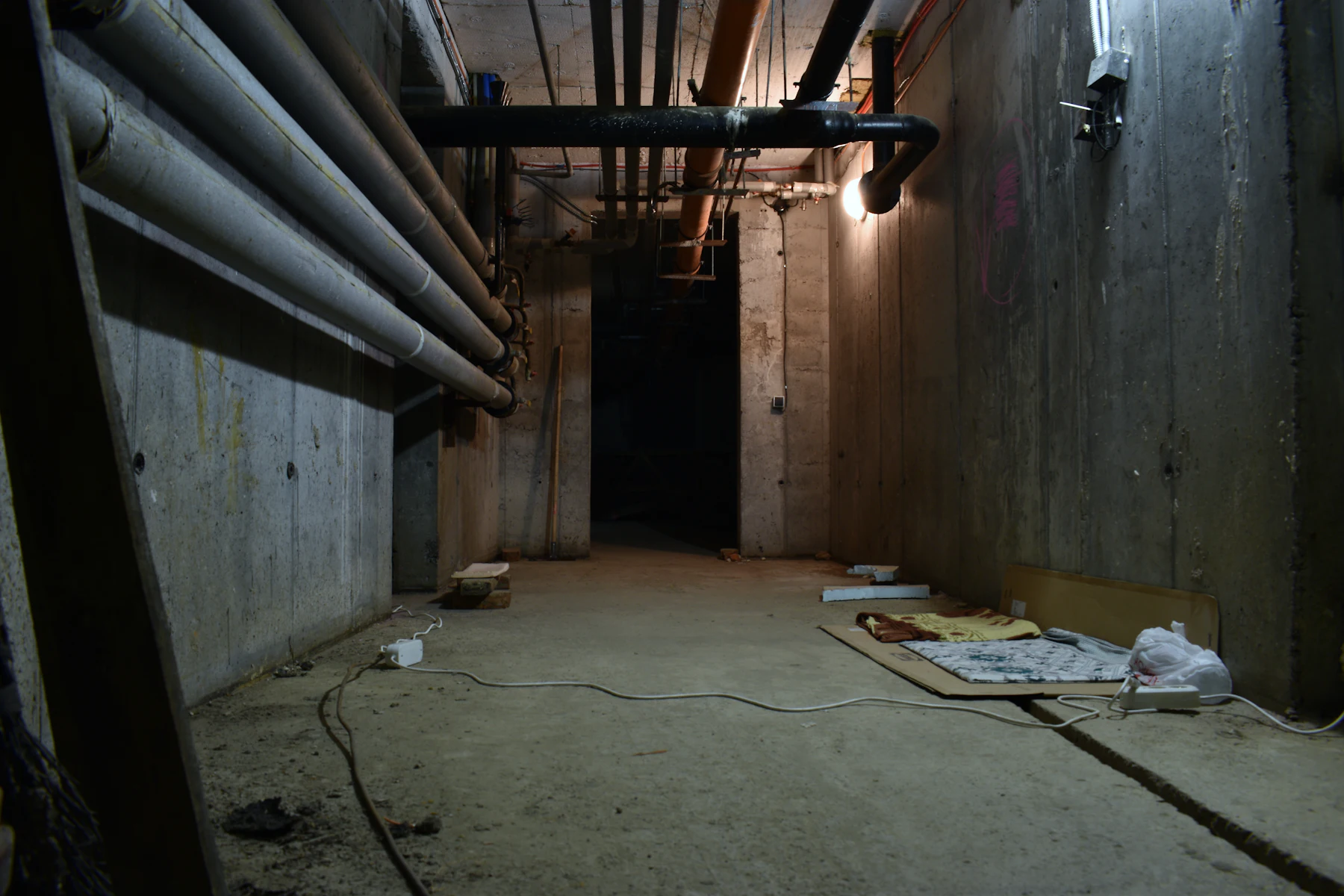
A vented, dirt-floor crawlspace pulls damp ground air — and the musty smell, mold spores and cold that come with it — straight up into your home. Encapsulation closes the crawlspace off from the outdoors and the soil, insulates the foundation walls instead of the floor above, and keeps the space dry for good.
Signs you need it
- Musty smell on the first floor, or a damp, earthy smell from below
- Cold floors over the crawlspace
- Sagging or dripping insulation under the floor
- Condensation, mold or wood rot on joists
- Pests getting in through open vents
- Standing water after heavy rain
How we do it
- Inspect & cleanCheck for water, mold, rot and pests; remove debris and failed insulation.
- Manage waterWhere water collects, add drainage and a sump pump first — encapsulation is not a substitute for fixing a leak.
- Seal the ventsClose foundation vents and the access door to stop humid outdoor air.
- Lay the linerA heavy-duty reinforced vapor barrier covers the floor and runs up the walls, seams overlapped and taped, edges sealed to the foundation.
- Insulate the walls & rimRigid foam or spray foam on the foundation walls and rim joist, so the crawlspace stays near indoor temperature.
- Control humidityA dehumidifier (or a small supply of conditioned air) keeps the space dry year-round.
Common questions
Is encapsulation the same as waterproofing?
No. Encapsulation controls ground moisture and humid air. If water is pouring in, we manage it first with drainage and a sump pump, then encapsulate.
Will my floors get warmer?
Usually yes. Insulating the foundation walls and sealing the vents keeps the crawlspace close to indoor temperature, so the floor above is no longer sitting over outdoor air.
Do I still need the floor insulation?
Once the walls are insulated, old batts under the floor are often removed — wet, sagging batts hold moisture and mold.